Selling
What an Ahwatukee Home Staging Consultation Covers
August 9, 2026 · 8 min read · Ahwatukee
Begin with goals and likely buyer questions
An Ahwatukee staging consultation is a practical home-preparation review, not an instruction to buy a houseful of furniture or remove every sign that someone lives there. The goal is to decide what helps buyers understand the home, what distracts from its features, and what can be changed within your time, budget, and comfort level. You should leave with clear priorities, not a vague list of chores.
Staging is communication. Your home needs to communicate its layout, care, flexibility, and best features quickly in person and through photographs. A consultation helps translate the way you live in the home into the way a prospective buyer needs to see it.
The first conversation is about your move, not throw pillows. We discuss why you are selling, when you hope to be ready, which rooms are hardest to change, and whether the home will be occupied during marketing. Those answers shape the recommendations.
Then we walk through the questions a buyer may have. Can I tell where the front door leads? Does the spare room function as an office, bedroom, or storage room? Is there enough room for ordinary furniture? Which improvements are worth completing before photos? A useful staging plan answers those questions visually without making claims the home cannot support.
If the preparation feels overwhelming after many years in one home, the ideas in this guide to preparing an Ahwatukee home after 20 years can help you start sorting the work into manageable decisions.
I am Amy Richardson. Savvy Realty Group is my practice, HomeSmart is my brokerage, and Ahwatukee has been home since 2008.
Review the arrival, entry, and sight lines
We start outside because a buyer forms an impression before reaching the living room. The consultation may note the approach to the front door, visible storage, porch items, landscaping maintenance, lighting, and the condition of the entry itself. The recommendation might be as simple as removing an overcrowded grouping, sweeping, or making the address easier to see.
Inside, we look at what is visible from the entry and how people naturally move through the first few spaces. Large furniture, tall objects, open doors, and collections can interrupt sight lines. The question is not whether an item is attractive. It is whether the item helps the viewer understand the home at a glance.
Clarify each room's function
Buyers often need help reading a room that serves several purposes. A dining area that also holds an office, a bedroom used for storage, or a loft filled with exercise equipment may make sense to you but feel uncertain in photos. We identify the primary function each space should communicate and preserve enough flexibility for a buyer to imagine another use.
That doesn't mean hiding the truth. If a room is compact, the plan should show its scale honestly. It may mean editing the contents, repositioning furniture, or creating a cleaner visual boundary between functions.
If you would rather see how I handle this as a service rather than as advice, that is selling a home in Ahwatukee and what an Ahwatukee home is worth.
Furniture editing is usually the first practical step
Staging can involve adding pieces, but editing is often more important. We look for furniture that blocks walkways, makes a room feel smaller, or competes with a focal point. Sometimes moving one chair, removing a side table, or changing the bed orientation creates more useful space.
For an occupied home, recommendations should account for everyday life. You need to be able to walk safely, prepare meals, sleep comfortably, and leave for work without resetting the entire house each morning. We can separate must-do edits from optional refinements so the plan remains realistic.
For a vacant home, the question changes. Selective rental furniture or digital presentation may help explain scale, but an empty room can also be the clearest choice. The right approach depends on the layout, condition, audience, and available resources.
Personal items, privacy, and a lived-in home
A staging consultation may recommend reducing highly personal displays, excess collections, visible paperwork, medication, valuables, and items that reveal private routines. This is not a judgment about your belongings. It is a privacy and presentation decision while strangers visit and images circulate online.
Keep the things that make the home comfortable while narrowing what is on display. A few intentional objects can give a room warmth. A crowded surface asks the viewer to study your belongings instead of the room's features.
Light, color, repairs, and maintenance
We consider how natural and artificial light behaves at different times, whether window coverings hide useful light, and whether bulbs create noticeably different color. The plan may include opening certain shades for photos, replacing a burned-out bulb, cleaning a fixture, or trimming a view that is distracting from a window.
Color recommendations are specific, not automatic. You may not need to repaint the entire home. One saturated wall, a heavily marked hallway, or a patchy touch-up may deserve attention, while a well-maintained color choice can stay. We also note small repairs that could raise questions during a showing, such as a loose handle, damaged screen, sticking door, or worn caulk.
These observations connect to the larger choice between improving the property and selling it in its current condition. If you're weighing that tradeoff, read whether to update or sell an Ahwatukee home as-is before committing to a long project.
Kitchens, bathrooms, storage, and outdoor areas
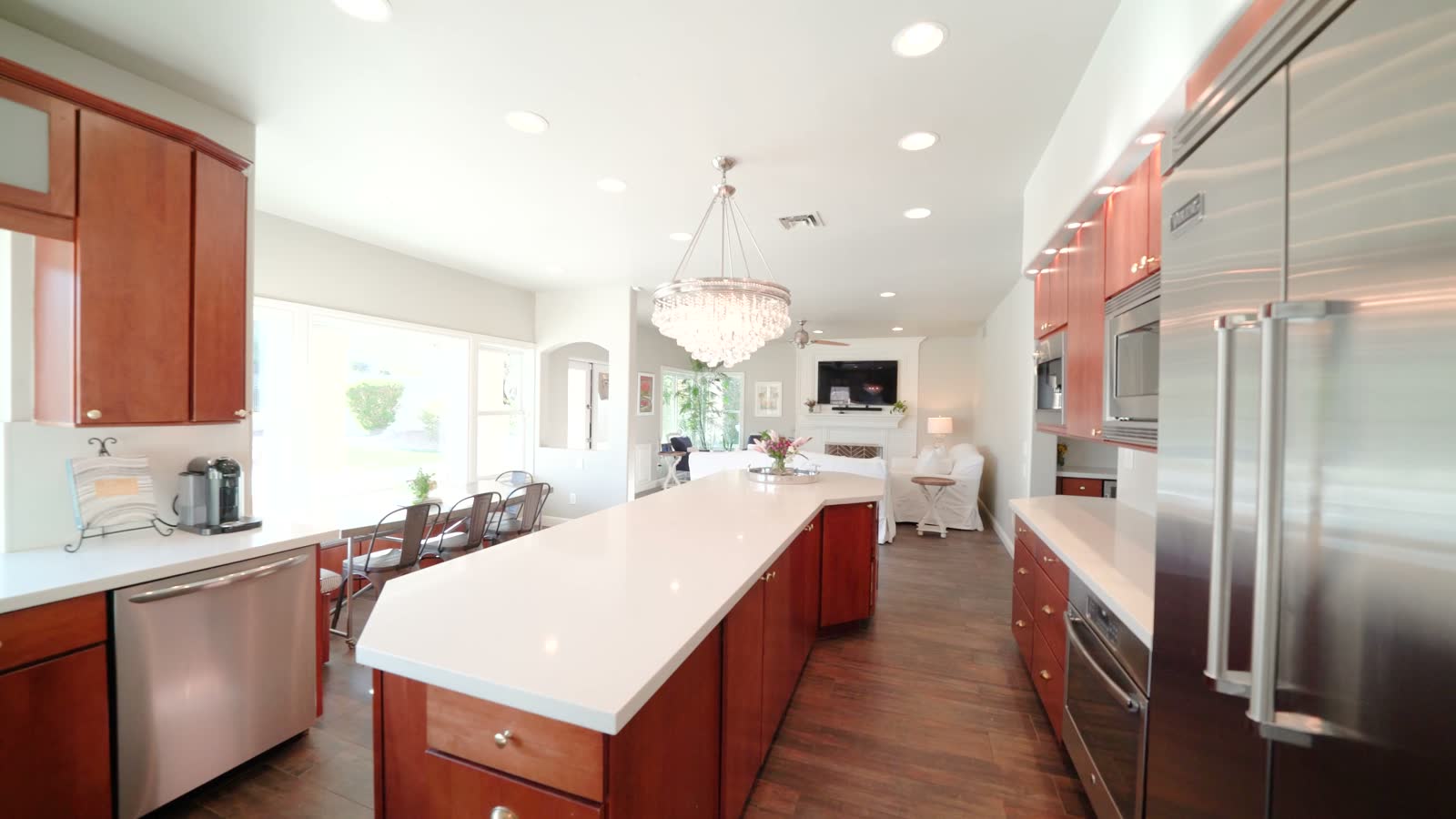
In the kitchen, the focus is usable counter space, clear pathways, and a clean view of the room's storage. We may suggest removing countertop appliances, reducing magnets, editing pantry overflow, or leaving a small number of functional items in place. In bathrooms, clean surfaces, fresh-looking towels, open floor area, and private storage matter more than decorative abundance.
Storage areas need to show capacity without pretending to be empty. A closet packed from floor to ceiling can make a normal amount of storage look limited. Editing and grouping items lets buyers see shelves, corners, and access points.
Outdoor areas receive the same practical review. We consider whether a patio, balcony, yard, or side path has a clear purpose, whether furniture fits the scale, and whether maintenance tasks should happen before photography. Ahwatukee homes can have very different lot character and outdoor layouts, so the plan should respond to your property rather than copy a model-home setup.
Occupied and vacant homes need different plans
An occupied home needs a repeatable routine. That may include a showing basket for daily-use items, a short closing checklist, and a decision about which belongings leave before professional photography. The plan should identify what stays accessible and where it can go quickly.
A vacant home needs attention to condition, proportion, and sequence. Cleaning, minor repairs, odor control, window coverings, and temperature management may matter before deciding whether to bring in furniture. A consultation can help prevent paying for a service that doesn't solve the home's actual presentation problem.
Prepare for photography, video, and showings
Online presentation is part of staging because many buyers first encounter the home through images. We review camera-facing clutter, reflections, cords, open toilet lids, visible bins, and anything that looks different from ordinary viewing distance. The photographer or videographer still brings professional skill, but the home needs to be ready for the lens.
We also consider the sequence of a showing. Lights should be easy to use, doors should open fully, and pathways should feel natural. The aim is to make the property easier to understand, whether someone visits in person or begins with a virtual tour.
Leave with a prioritized written plan
The most useful result is a prioritized list. It may separate safety or maintenance items, high-impact visual edits, optional improvements, packing decisions, and tasks for the day before photos. Each recommendation should have a reason, an owner, and a place in the timeline.
Depending on the property, I can help coordinate preparation conversations with trusted tradespeople, cleaners, photographers, or other vendors. That doesn't mean every home needs every service. It means you have a clearer path from the consultation to the Savvy Solutions to Sold process and can make decisions in the right order.
If a project involves specialized construction, insurance, tax, legal, or financing questions, bring in the appropriate licensed professional. A staging consultation can identify a question, but it doesn't replace that professional's advice.
What staging cannot guarantee
Staging cannot guarantee a particular offer, price, timeline, appraisal result, or buyer reaction. It cannot correct significant condition issues by itself, and it should not disguise a material property concern. Good staging supports clear presentation and informed decisions. It does not replace accurate pricing, honest disclosure, strong marketing, or thoughtful negotiation.
For that reason, staging is one part of a larger listing conversation. A review of what your Ahwatukee home may be worth should account for condition, comparable properties, location, features, and current market context. A consultation then helps you decide how much preparation makes sense for your goals.
My job is to help you see the home through a buyer's eyes while respecting the life you've built there. We can identify the few changes that clarify the story, protect your privacy, and move the property toward launch with less uncertainty. If you want to understand the broader preparation and marketing support available, you can also review our case studies.
Where to go from here
The staging consultation is complimentary on every listing I take, at every price point, and it is usually the highest-value hour of the whole process. Ask for the walkthrough and I will tell you what a buyer will notice first.
Common questions
- Do I have to rent furniture after an Ahwatukee staging consultation?
- No. The consultation may recommend editing or rearranging your existing furniture, selective rentals, digital presentation, or no added furniture. The choice depends on the home's layout, condition, occupancy, and marketing plan.
- What should I do before the consultation?
- You don't need to deep-clean or pack the entire home first. Make normal pathways accessible, gather questions about timing and budget, and be ready to discuss which rooms or belongings are difficult to change.
- Will the consultant tell me to repaint everything?
- Not necessarily. Color decisions should be tied to visibility, condition, and how the home photographs. A targeted repair or touch-up may be more useful than a whole-home repaint.
- Can staging help if my home needs repairs?
- It can help prioritize what buyers are likely to notice, but staging doesn't replace repairs or disclose condition. Significant work should be evaluated with the appropriate contractor or licensed professional.
- How does staging work when I still live in the home?
- An occupied-home plan focuses on practical edits, privacy, daily routines, and a repeatable showing reset. It should distinguish essential preparation from optional changes so the process remains manageable.