


The current housing market varies significantly depending on location. Some areas are experiencing increased activity from buyers, while others see sellers maintaining control. Local market trends are increasingly diverging.
Understanding Buyer’s and Seller’s Markets
A buyer’s market occurs when there are more homes for sale than there are buyers. This typically results in longer listing times, greater negotiating leverage for buyers, and softened prices. In a seller’s market, limited housing supply relative to demand leads to quicker sales, multiple offers, and price increases. Both types of markets are currently observed across different regions. Consulting a local real estate agent can provide insight into specific market conditions using regionally relevant data.
Regional Differences in Buyer and Seller Activity
Market dynamics are affected by the number of active buyers and sellers. Recent data from Redfin indicates that the Northeast and Midwest generally remain seller’s markets, with higher demand leading to faster sales and rising prices. Conversely, the South and West display more characteristics of buyer’s markets, such as increased inventory and less competition among buyers.

This represents a change from previous years when sellers had an advantage in most areas. Local market conditions now have a more significant impact, and trends may vary within individual neighborhoods.
Price Trends Reflect Market Division
Changes in housing inventory and buyer interest influence price movement. In regions where demand exceeds supply, such as much of the Northeast and Midwest, home prices continue to rise. However, in parts of the South and West, where there is more inventory and reduced demand, prices are stabilizing or declining, providing potential opportunities for buyers. Data from ResiClub illustrates this divide among major metropolitan areas, with about half showing price growth and half remaining stable or decreasing.
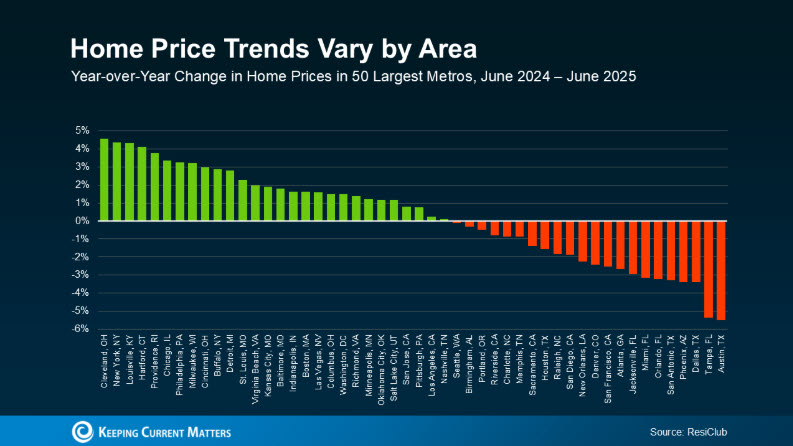
For homeowners in areas with declining prices, many still retain significant equity accumulated in recent years.
Importance of Local Market Insights
Market conditions can differ even within the same region. Local expertise is valuable for understanding market trends at the city, town, or neighborhood level, such as:
· Current status as a buyer’s or seller’s market
· Pricing strategies and offer approaches based on local patterns
· Best practices for navigating changing market conditions
Summary
Given the variability in market conditions by location, a thorough understanding of the local area is essential. Connecting with a knowledgeable professional can assist in making informed decisions about buying or selling property in today’s market.
Source: Real Estate with Keeping Current Matters